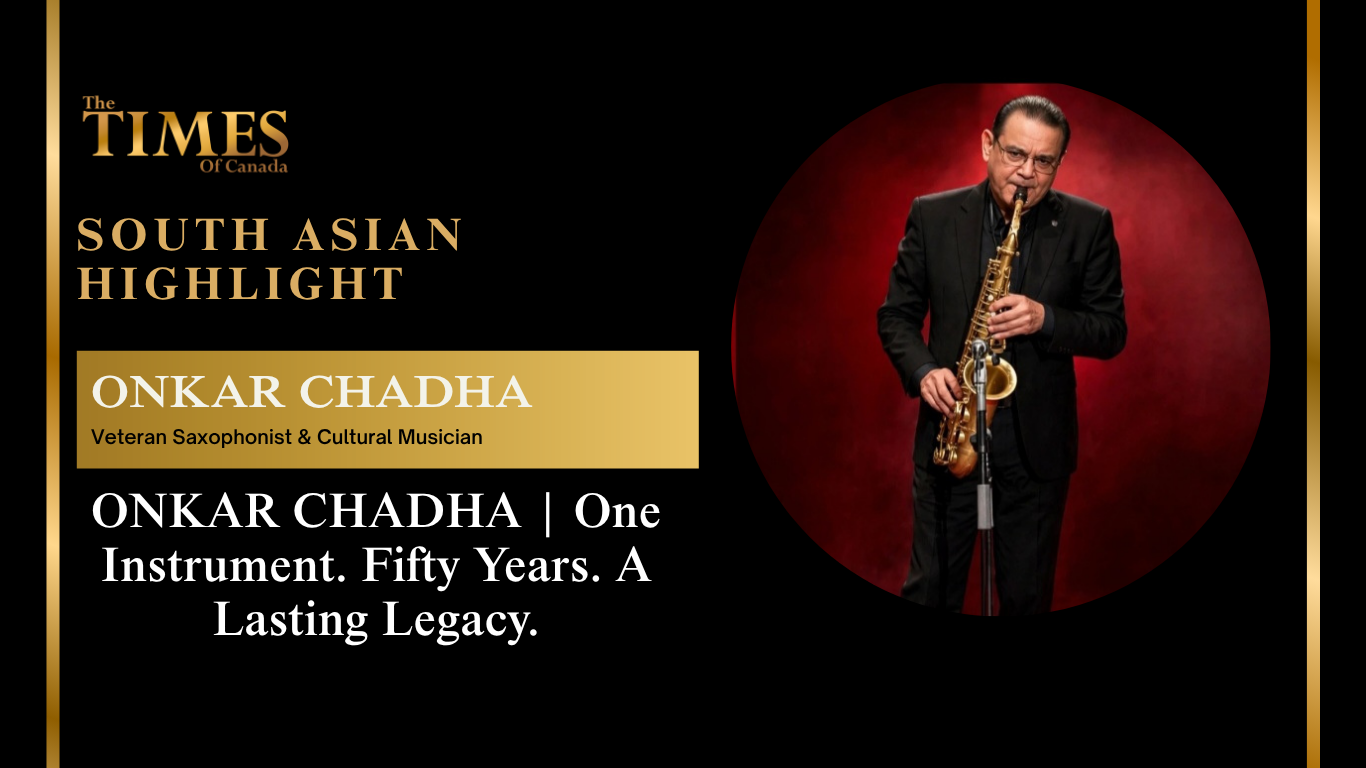
For 50 years, Onkar Chadha has carried a rare musical tradition across generations, one breath, one note and one performance at a time.
There are sounds that become part of a community’s memory. They are heard at celebrations, cultural gatherings and family events, eventually becoming familiar enough to feel like they have always been there. For generations of South Asians in British Columbia, the sound of Onkar Chadha’s saxophone has become one of those sounds.
For five decades, Chadha has dedicated himself to an instrument that holds a unique place within South Asian music. His journey has continued through decades of cultural change, growing communities and generations of musicians. What makes his story remarkable is not simply its longevity, but the discipline and dedication behind it.
The saxophone demands exceptional breath control, physical stamina, precise fingering and countless hours of practice. Over time, Chadha transformed that demanding discipline into a natural musical expression. The instrument became more than something he played. It became an extension of his voice, creating a bridge between Western instrumentation and South Asian musical expression.
Behind every lasting musician is often a teacher, and for Chadha, that teacher was the late Guruji Davinder Hundle. Under Hundle’s guidance, Chadha learned the fundamentals, discipline and patience required to master his craft. Though Hundle passed away last year, his influence continues through every note Chadha plays.
His journey is also closely connected with Kala Mandir Musical Society, founded in 1976. As Kala Mandir celebrates 50 years of contributing to British Columbia’s cultural life, Chadha marks the same milestone in his own musical journey. Their parallel histories reflect the growth of South Asian culture in the province and the importance of creating spaces where heritage can be preserved and shared.
Chadha’s music has continued to grace community stages, including cultural programming with Vivek Canada and Dawn to Dusk events. His saxophone has become part of celebrations that bring generations together and demonstrate how music can connect tradition with a new Canadian identity.
His 50 year milestone is therefore more than a celebration of longevity. It is a recognition of cultural contribution, mentorship and perseverance.
For Onkar Chadha, the dedication has always been simple: keep playing, keep learning and keep the music alive.
Fifty years later, the saxophone is still in his hands.
And the music is still being heard.